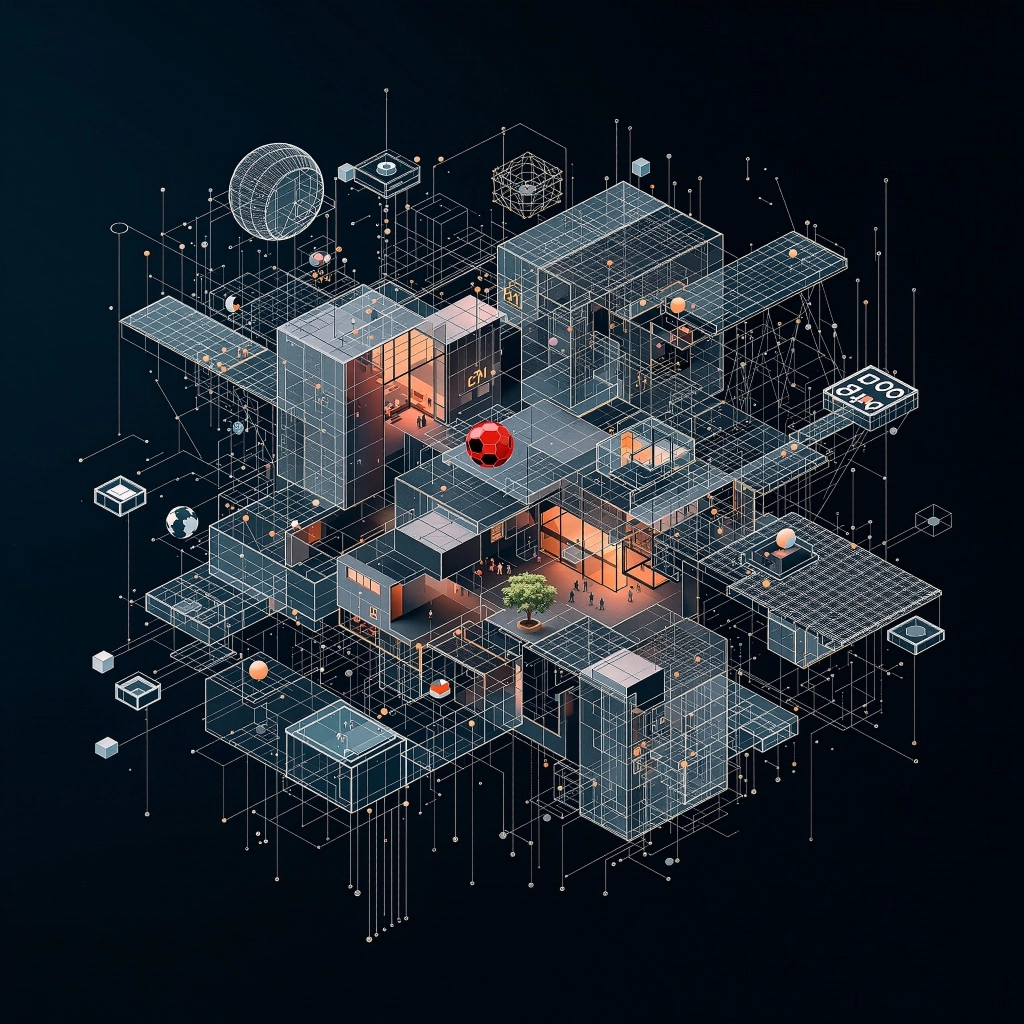
AI-Augmented & Generative Design: How Artificial Intelligence is Transforming the Future of Architecture
“Discover how Ervin Architecture, a leading Maine commercial architect, leverages AI-augmented design and generative modeling to create smarter, faster, and more innovative buildings. Explore the future of architectural design through artificial intelligence, automation, and data-driven creativity.”
AI-Augmented & Generative Design: Architecture’s New Creative Frontier
The architecture industry is undergoing one of its most transformative periods since the introduction of CAD and BIM. Today, artificial intelligence (AI) and generative design tools have moved from conceptual experiments into essential components of modern architectural practice. For firms committed to innovation—like Ervin Architecture—this technology is not a trend or a shortcut, but a creative accelerant that expands what’s possible in the built environment.
As a Maine commercial architect operating in one of the most environmentally sensitive and design-conscious regions of the country, our mission is to embrace tools that make buildings more responsive, efficient, and compelling.
AI-augmented design empowers us to do this with unprecedented speed and insight.
In this article, we explore how AI and generative modeling are reshaping architecture, what benefits clients can expect, and how Ervin Architecture integrates these tools into our workflow to deliver smarter and more sustainable design outcomes.
What Is AI-Augmented & Generative Design?
AI-augmented design refers to the use of artificial intelligence to assist architects in analyzing data, generating concepts, simulating performance, and improving design decision-making. It does not replace human insight—instead, it helps architects evaluate more possibilities than ever before.
Generative design, a branch of AI-assisted creation, uses algorithms to produce thousands of design variations based on specific criteria such as:
- Site orientation
- Energy performance
- Circulation efficiencies
- Structural optimization
- View corridors
- Material use
- Sustainability goals
- Cost constraints
The software generates options, evaluates their performance, and highlights the most promising solutions. The architect then reviews, refines, and advances these outcomes. In this relationship, the AI is a tireless assistant, while the architect remains the creative and ethical decision-maker.
Why AI Matters for Commercial Architecture in Maine
Maine presents a unique blend of environmental sensitivity, rigorous building codes, coastal site challenges, and a growing demand for sustainable commercial development. As a commercial architect in Maine, Ervin Architecture faces landscapes that demand smart, adaptive design strategies.
AI tools help address several of the region’s most pressing architectural challenges:
1. Climate Responsiveness
Maine’s climate is diverse and demanding—cold winters, coastal winds, intense sunlight in summer.
AI can simulate:
- Heat loss
- Snow load patterns
- Solar heat gain
- Natural ventilation
- Daylight penetration
- Weather resilience
This allows us to create buildings that respond precisely to environmental conditions rather than relying on generic assumptions.
2. Coastal & Urban Site Constraints
Generative design can optimize massing and orientation for sites with:
- Waterfront exposure
- Flood risk
- Historic context
- Irregular lot shapes
- View sensitivity
- Height limitations
AI excels at sorting through constraints and identifying buildable opportunities.
3. Sustainability Requirements
As Maine embraces more stringent energy codes and carbon-reduction goals, AI gives architects the ability to evaluate low-carbon strategies early in the design process—long before costly changes occur.
4. Faster, More Accurate Planning
Commercial clients—developers, municipalities, institutions—need predictable results and accelerated timelines.
AI speeds up:
- Feasibility studies
- Concept generation
- Preliminary cost estimation
- Performance modeling
This means better clarity from the outset and fewer revisions later.
How Ervin Architecture Uses AI in Our Workflow
At Ervin Architecture, AI augments our creativity rather than replacing it. Below are key areas where we integrate AI-based tools into our design and project planning processes.
1. Generative Massing & Site Strategy
Before the first sketch, AI analyzes the site to produce massing options based on:
- Sun angles
- Prevailing winds
- Surrounding structures
- Access points
- Setbacks
- Topography
For Maine’s coastal towns, this is particularly valuable—it helps us explore view corridors, mitigation of wind loads, and ways to minimize environmental impact.
2. Floor Plan Optimization
AI can evaluate millions of spatial arrangements according to:
- Circulation efficiency
- Occupancy comfort
- Functional adjacency
- Code and accessibility compliance
- Flexibility for future growth
The result? Earlier alignment with client needs and fewer late-stage plan revisions.
3. Daylighting & Energy Performance Modeling
Lighting conditions dramatically affect commercial interior environments. Using AI-driven simulations, we evaluate:
- Annual daylight exposure
- Glare risk
- Solar heat gain
- Energy savings from shading strategies
- Window-to-wall ratios
- Material reflectivity
These insights translate directly into more comfortable, cost-effective spaces.
4. Façade Design & Environmental Shading Systems
Generative tools allow us to explore high-performance façade systems that respond dynamically to the environment. AI-assisted façade design helps evaluate:
- Pattern efficiency
- Thermal behavior
- Shading performance
- Fabrication cost
This ensures the façade is both beautiful and functional—critical for modern commercial buildings.
5. Structural Optimization
AI can propose structural systems that minimize material usage while maximizing stability and performance.
Benefits include:
- Lower embodied carbon
- Lower cost
- Faster fabrication
- Improved long-term maintenance outcomes
For timber-rich Maine, AI helps evaluate mass timber options that align with regional sustainability goals.
6. Automated Code Checking
AI can scan floor plans to identify potential code violations before they become issues.
This includes:
- Egress conflicts
- Clearance issues
- Accessibility requirements
- Fire separation
- Stair compliance
This saves time, money, and frustration during permitting.
How AI Enhances Creativity Instead of Replacing It
A common misconception is that AI threatens the role of the architect. In reality, it empowers architects to think more boldly.
AI Doesn’t Design—It Suggests
It provides options, not solutions.
AI Doesn’t Decide—It Evaluates
It ranks alternatives based on measurable performance.
AI Doesn’t Create Vision—It Amplifies It
Vision comes from the architect—the technology simply speeds the journey.
At Ervin Architecture, human creativity remains at the core of every project. AI allows us to explore the creative landscape more fully and deliver exceptional results to our clients.
Real-World Benefits for Our Clients
For commercial clients in Maine, AI-enhanced design offers tangible advantages:
• Faster Project Timelines
Early-stage decisions become clearer sooner.
• Improved Cost Predictability
Data-driven insights stabilize budgets.
• Better Building Performance
From energy to comfort, buildings simply work better.
• Enhanced Aesthetic Possibilities
AI unlocks geometries and patterns not easily discovered through manual methods.
• Reduced Environmental Impact
Smarter material usage and energy modeling lead to greener outcomes.
The Future of AI in Architecture
We’re still early in the AI revolution. Over the next decade, we expect:
- Real-time generative collaboration tools
- Predictive maintenance integration with digital twins
- Direct-to-fabrication parametric workflows
- AI-assisted zoning and planning reports
- Deep-learning-based structural design
- Adaptive façades informed by machine learning
Ervin Architecture is committed to leading this transformation in Maine’s commercial building sector.
Conclusion: A More Intelligent Built Environment
AI is more than a technological upgrade—it’s a paradigm shift in how architects design, evaluate, and communicate. By integrating AI-augmented design and generative modeling into our practice, Ervin Architecture continues to redefine what it means to be a forward-thinking Maine commercial architect.
These tools help us deliver buildings that are:
- More sustainable
- More responsive
- More efficient
- More innovative
- More aligned with client goals
The future of architecture is intelligent—and that future is here.