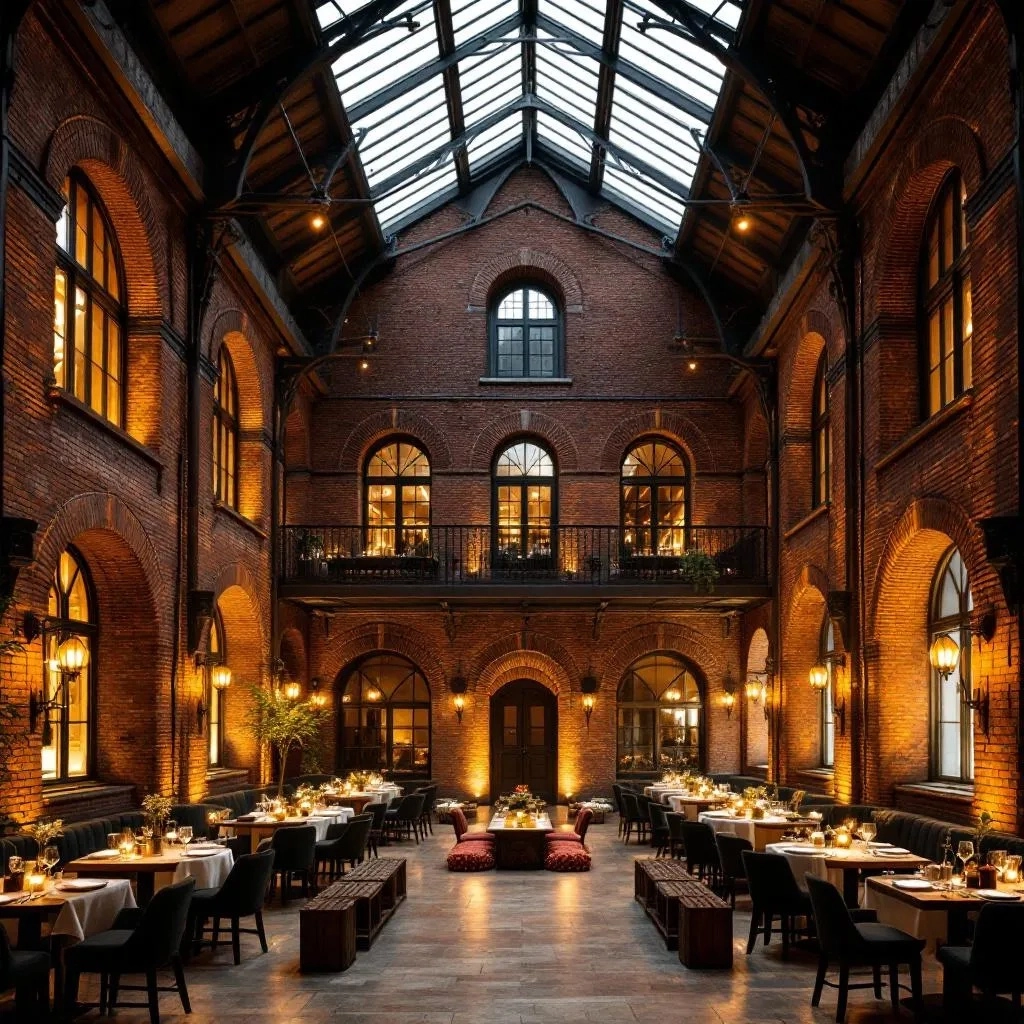
Across North America, smaller cities and former mill towns are sitting on a quiet superpower: historic building stock. Brick warehouses, timber-framed mercantile structures, and century-old storefronts often sit underused while communities search for ways to bring people—and energy—back downtown.
Adaptive reuse hospitality projects are one of the fastest ways to flip that story.
Ervin Architecture’s work on KANU in Old Town, Maine, is a case in point. What was once a 19thcentury brick-and-timber mercantile building is now a three-story restaurant, nightclub, and rooftop lounge that’s become a regional destination and a key part of Old Town’s revitalization.
1. Start by listening to the building
Adaptive reuse is not about forcing a new concept into an old shell. It’s about listening to what the building is already trying to be.
For KANU, that meant taking stock of: – The exposed brick and heavy timber structure – Existing window rhythms and street frontage – Ceiling heights that could support performance lighting and sound systems – Structural spans that would influence kitchen placement, bars, and dance floors
Rather than covering the building’s history, we made it the backdrop for a new hospitality experience. That authenticity is something you cannot fake in new construction.
2. Design vertically, not just front-to-back
One of KANU’s biggest advantages is its vertical stacking of experiences: – First floor: a farm-to-table restaurant – Second floor: nightclub and performance space – Third floor: rooftop lounge
This vertical program allows the building to support multiple atmospheres, dayparts, and customer segments within a single footprint. Lunch at the restaurant feels different from latenight DJ sets, yet the brand and design language connect all three.
For other cities, this offers a powerful model: – Stack a casual concept under a more premium one – Put live entertainment above quieter dining – Use the rooftop as a signature destination that animates the skyline
3. Balance code, structure, and vibe
Historic buildings come with challenges: existing egress paths, limited structural capacity in some zones, old masonry, and mixed records of prior work. Success requires aligning three realities:
- What code requires (exits, fire separations, accessibility, acoustics)
- What the structure can support (loads, penetrations, openings)
- What the hospitality concept needs to feel like (circulation, sightlines, intimacy vs. openness)
At KANU, restoring the brick facade and working within historic context requirements while upgrading the building for modern loading, mechanical systems, and nightlife use demanded careful coordination between architecture, structural engineering, code consultants, and the local jurisdiction.
The result is a building that feels both timeless and tuned to current expectations.
4. Make the streetfront magnetic
Adaptive reuse hospitality only works if it pulls people in from the street.
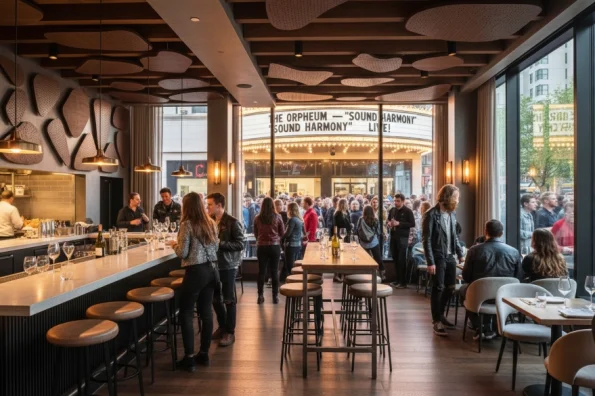
Key moves we consider: – Transparent glazing where appropriate to showcase the bar, dining room, or lobby – Warm, layered lighting that reads clearly at pedestrian scale – Entry sequences that feel welcoming in all seasons – Outdoor signage and canopies that reinforce the brand without overwhelming the historic fabric
In smaller cities and towns, a single well-designed hospitality project like KANU can reset expectations for an entire block or district.
5. Anchor the story in local culture
KANU isn’t just a pretty building; it’s a love letter to Old Town.
The concept references Old Town Canoe, a local company tied to the owner’s family for generations. Material choices, textures, and details echo canoe craftsmanship, the Penobscot River, and Maine’s outdoor culture while still feeling sophisticated enough to attract regional visitors.
Adaptive reuse is most powerful when the architecture, branding, and operations all tell a coherent story about place—not just concept.
If your community has underutilized historic buildings and an appetite for better nightlife and dining, adaptive reuse hospitality may be the fastest way to redefine your downtown. Ervin Architecture can help you identify the right building, the right programming, and the right design moves to make it happen.