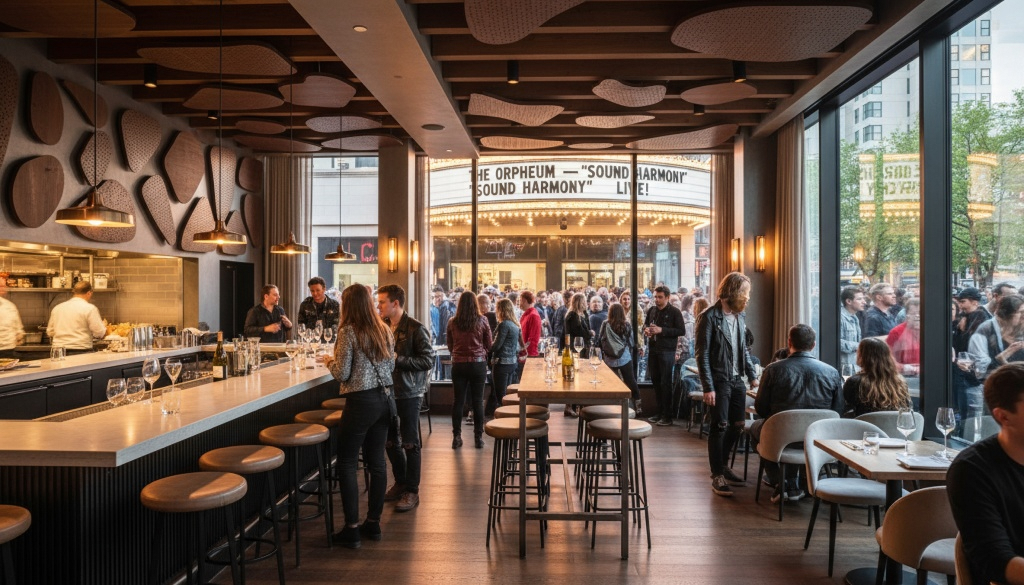
In a thriving live entertainment ecosystem, restaurants are not side characters. They’re costars.
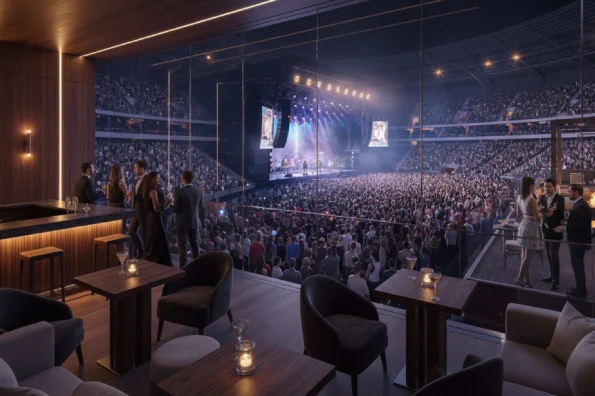
Fans arrive hours before a show looking for food, drinks, and social energy. After the encore, many are not ready to go home. Restaurants and bars that understand this show rhythm don’t just benefit from it—they help define it.
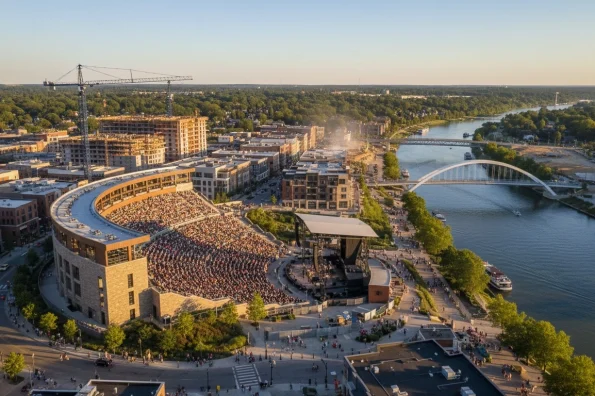
At Ervin Architecture, we’ve designed both major venues and destination restaurants that live in the same orbit, like KANU in Old Town and projects connected with the Maine Savings Amphitheater in Bangor. Here’s how we think about restaurant design in the context of live entertainment.
1. Design for three distinct time windows
Most restaurants plan around lunch and dinner. In entertainment districts, we plan around:
1) Pre-show: fast, energetic, time-sensitive
2) During show: quieter, lingering, often locals or late diners
3) Post-show: high-energy, spontaneous, often drink-driven
Architecturally, this means: – Multiple seating types: bar seating for quick pre-show meals, dining zones for longer stays, and flexible high-top zones that can flip quickly post-show. – A bar that can handle surges without overwhelming the entire room. – Circulation paths that let guests arrive and leave quickly without cutting through the most intimate zones.
KANU, for example, uses a combination of restaurant-level seating, nightclub zones, and a rooftop lounge to absorb these different waves of activity under one roof.
2. Treat the bar as an anchor, not an afterthought
In entertainment-driven locations, the bar is often the true organizing element.
We position bars to: – Be easily visible from the entry to orient guests immediately. – Act as a visual and social focus without dominating the entire space. – Serve as a hinge between quieter dining zones and more energetic music or lounge zones.
Thoughtful bar placement helps restaurants stay profitable on nights when show-goers mostly want drinks and light bites, without compromising the experience for full-service diners.
3. Use acoustics and lighting to modulate energy
Restaurants near venues have to live in multiple moods: early-evening date nights, pre-show hype, late-night socializing.
We tune: – Acoustics: using absorptive and diffusive surfaces to keep sound levels comfortable even when the room is full and the playlist leans louder. – Lighting: layering ambient, task, and accent lighting so that the same physical space can feel intimate at 6 PM and electric at 10:30 PM. – Sightlines: so that guests can feel the room without feeling like they’re sitting in a stadium.
At KANU, the shift from restaurant floor to nightclub level to rooftop lounge is supported by changes in lighting, finishes, and sound, even as the brand stays coherent.
4. Integrate local story and regional draw
For restaurants tied to the live entertainment economy, it’s not enough just to be “near the venue.” You have to be worth the trip, even when there’s no show.
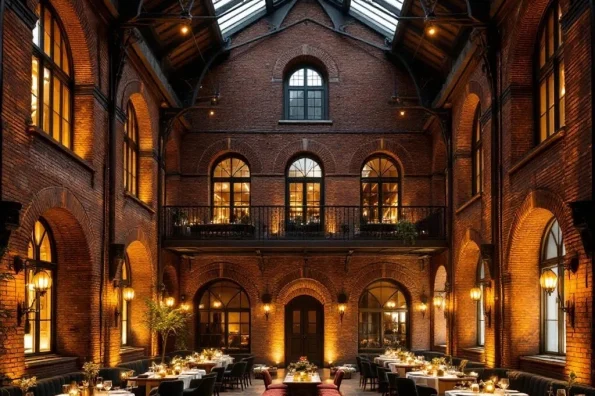
KANU’s farm-to-table restaurant and design language, rooted in Old Town Canoe and the Penobscot River, give it a strong identity beyond any particular night’s performance schedule. Guests will visit for the architecture, the story, and the menu even when the stage is dark.
When we design restaurants in or near venue districts, we push for: – Authentic local narratives, not generic “industrial chic” – Menus that reference regional ingredients and seasons – Architecture that photographs beautifully, supporting organic social media and free marketing
5. Plan for reliability on the hardest nights
Lastly, restaurants in entertainment districts must operate reliably on the most intense nights—sell-outs, weather swings, traffic delays. Architecture should help, not hinder.
We think hard about: – Separate entrances or lobbies for private events or VIP buyouts – Outdoor waiting zones that feel gracious, not cramped – Back-of-house routing that keeps staff flowing even when guests cluster near the door – Storage and prep capacity that support sudden volume
When restaurants are designed with the show cycle in mind, they become essential partners to venues, promoters, and cities—not just neighbors.
If you’re developing a restaurant, bar, or hospitality concept in the orbit of a live entertainment district, Ervin Architecture can help you architect both the space and the show.