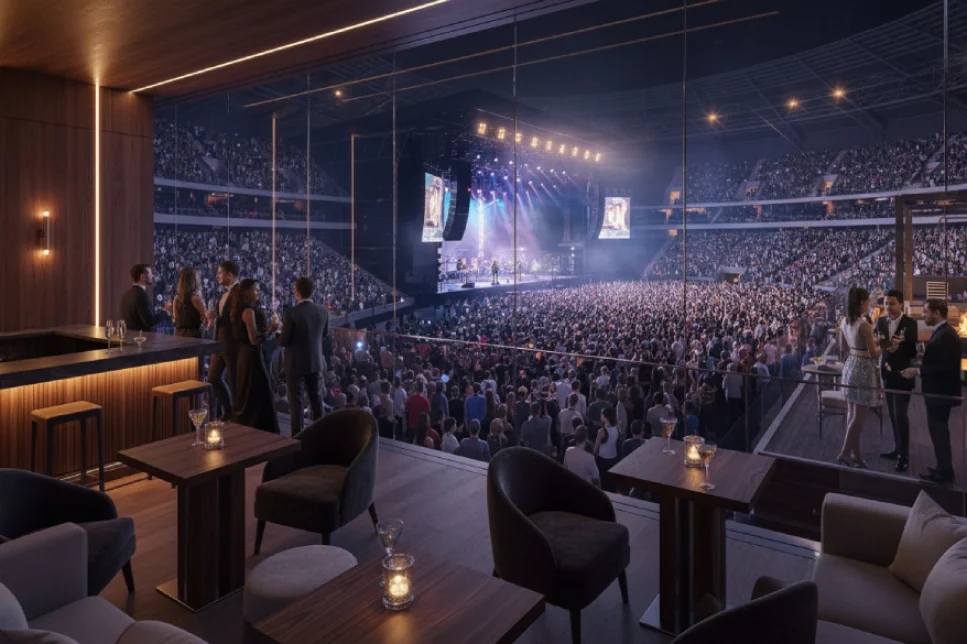
In today’s live entertainment landscape, premium and VIP offerings are not a luxury—they’re the business model. Suites, sky decks, and club levels help venues compete for tours, support capital improvements, and give fans new ways to connect with the artists they love.
Big tours used to belong almost exclusively to major metros. But over the last decade, smaller cities have started landing A-list acts and multi-night runs that would have been unthinkable a generation ago. The secret is rarely just better marketing. It’s almost always better venues.
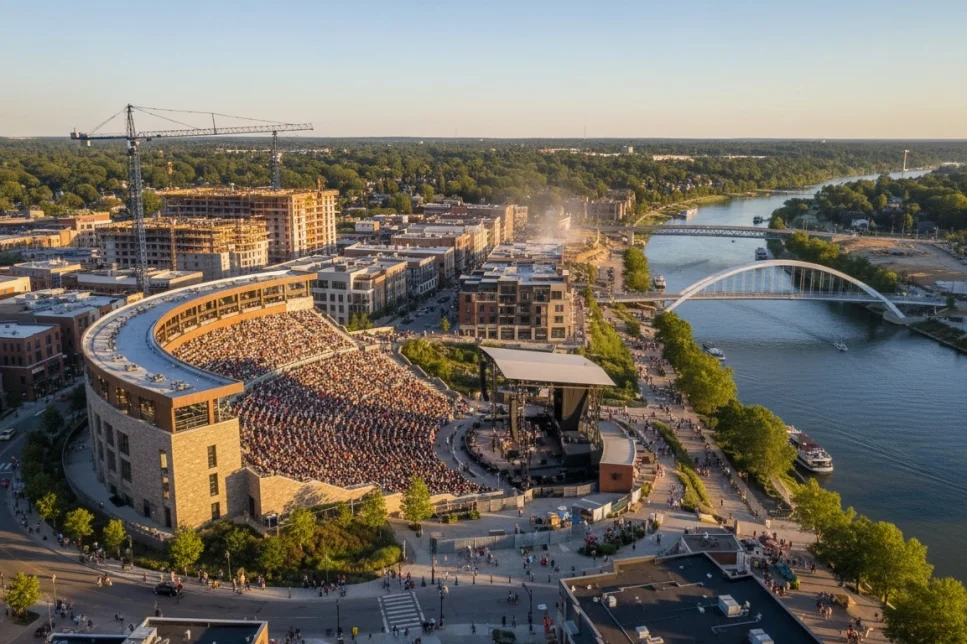
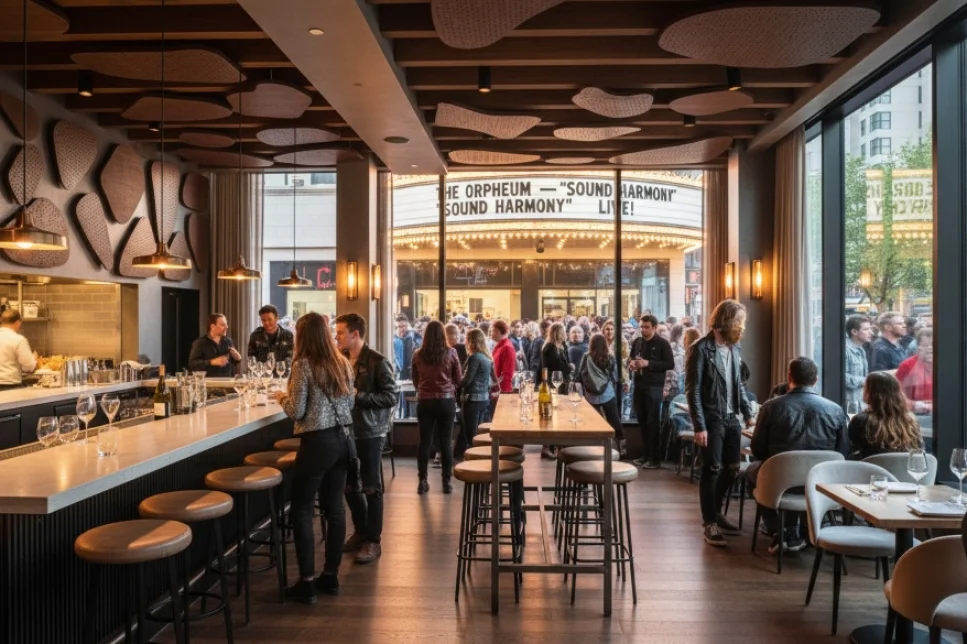
At Ervin Architecture, we’ve designed both major venues and destination restaurants that live in the same orbit, like KANU in Old Town and projects connected with the Maine Savings Amphitheater in Bangor. Here’s how we think about restaurant design in the context of live entertainment.
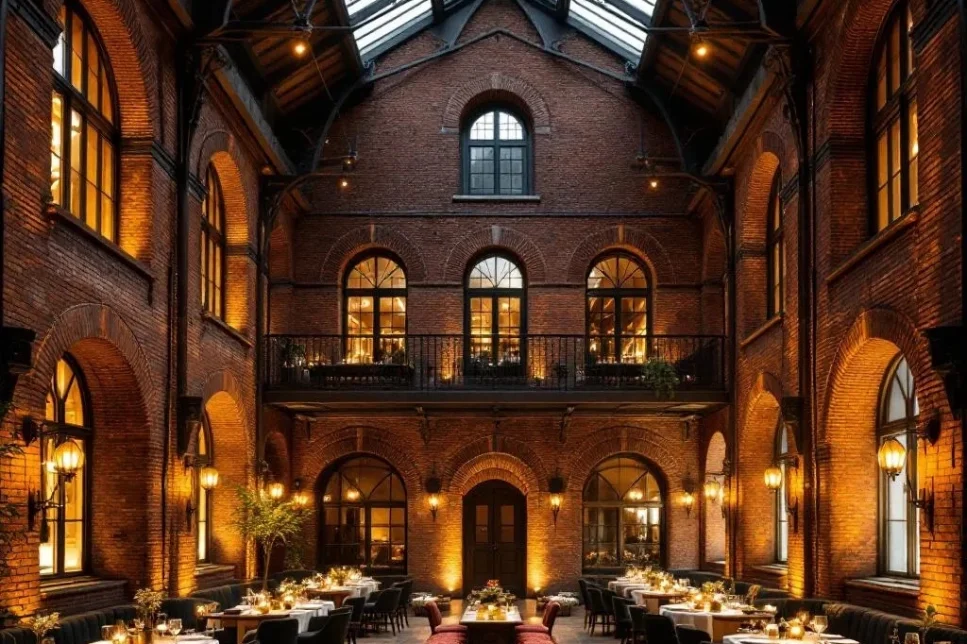
Across North America, smaller cities and former mill towns are sitting on a quiet superpower: historic building stock. Brick warehouses, timber-framed mercantile structures, and century-old storefronts often sit underused while communities search for ways to bring people—and energy—back downtown.
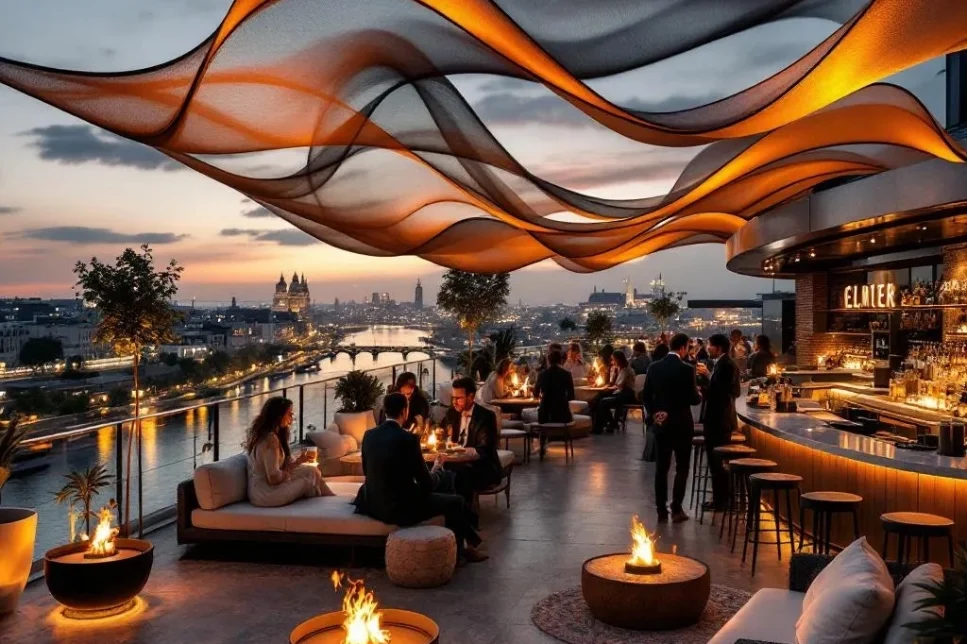
Rooftop spaces have quietly become some of the most powerful revenue-generating real estate in hospitality and live entertainment. A great rooftop bar or sky deck can turn a “nice venue” into the place everyone wants to be seen.